The Supreme Court analyzes appealing the Wealth Tax to the Constitutional
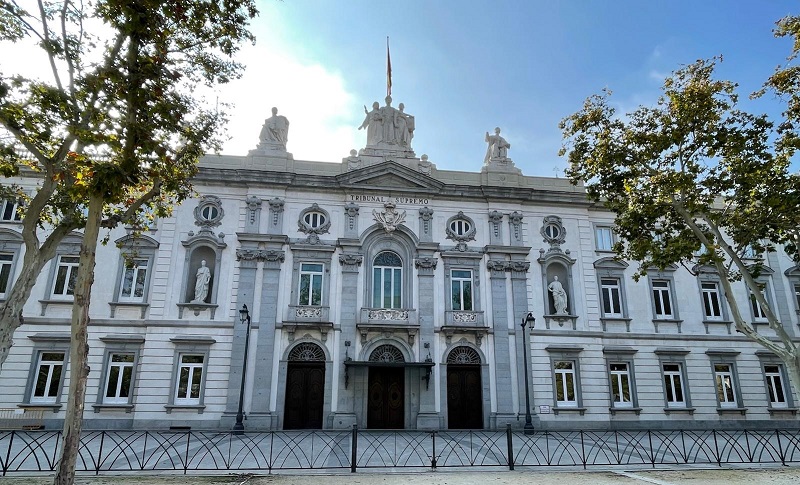
In April 2021, the Constitutional Court accepted the appeal filed by the Popular Party, after the Government of Pedro Sánchez decided to make this tax permanent through the General Budget Act of that year. The party led by Alberto Núñez Feijóo argued that a budget law cannot introduce substantial changes to a tax unless specific tax regulations specifically allow it.
On the other hand, in May 2023, the employers Foment del Treball filed a contentious-administrative appeal with the National High Court, requesting that the matter be transferred to the Constitutional Court. However, almost two years later, the Central Court has not yet accepted the appeal or taken a decision on the matter.
The fourth judicial process began two years ago in the High Court of Justice of Catalonia (TSJC), promoted by the firm Ros Petit. However, the Supreme Court suspended the processing of the case pending the decision of the Constitutional Court. According to Ángel Sáez, director of the firm, Wealth Tax has been void since 2014.
To understand this statement, it is necessary to review the evolution of the tax. In 2008, the Government of José Luis Rodríguez Zapatero suppressed it by means of an ordinary law. However, in 2011 it was reactivated through a Royal Decree-Law for that year and the following. Later, it was extended to 2013 by another ordinary law. The problem arose when its extension starting in 2014 was carried out through the General Budget Act of 2013.
Sáez recalls that the Constitution prohibits a Budget Law from creating new taxes and only allows it to modify them if the tax regulations authorize it. In this case, the Wealth Tax Act only allows adjustments in quantitative aspects, but not in essential elements such as its application or the obligation to tax.
“Since 2014, no law has been passed that reincorporates the key articles of the tax: 36, which regulates self-assessment; 37, which establishes obligated taxpayers; and 38, which defines the form of filing. Therefore, as of January 1, 2014, this tax should not exist,” Sáez argues.
There is still no date for the Constitutional Court to issue its ruling, since the PP's appeal has not been resolved for four years. However, Sáez considers it unlikely that he will speak out in the middle of the tax collection campaign, which begins on April 2 and ends on June 30.
If the ruling were contrary to the tax, it could open the door to refunds of more than 12 billion euros from the autonomous communities, considering what was collected between 2014 and 2023, in addition to interest on late payment. However, the Constitutional Court could opt for a limitation on refunds, as it did in previous cases with capital gain tax or with the annulment of certain Royal Decree-Laws, restricting them only to those taxpayers who have filed claims through administrative or judicial channels.
(The Economist, 01-04-2025)